Why Is My AC Running Constantly? Causes, Quick Checks, and When to Call
Long run times can be normal in Houston-area heat. Here is how to tell, what to check, and when to call.
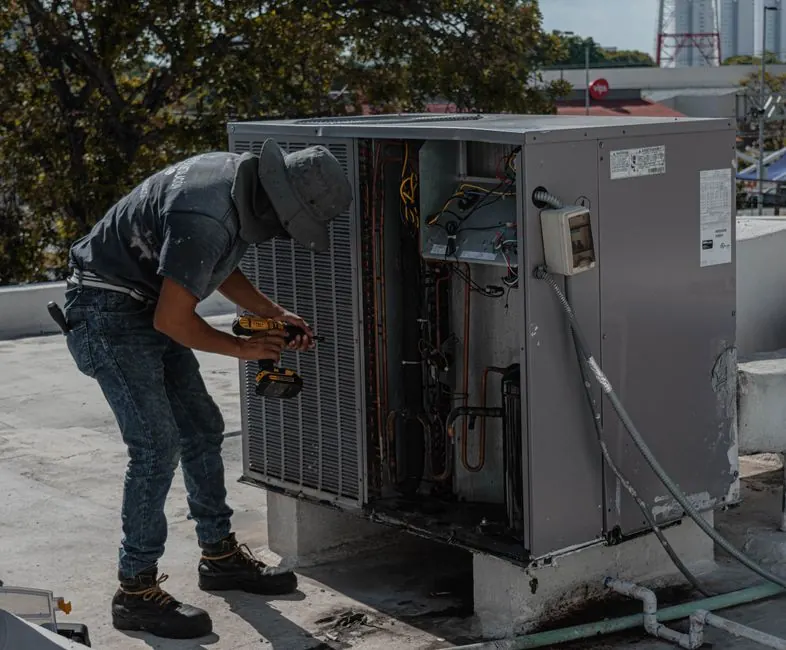
If your air conditioner has been running for hours, the first question is not “What is broken?” It is “Is the house still cooling?” During a Houston-area summer, long run times are normal. A system that runs nonstop and cannot reach or hold the temperature you set is not. This guide helps you tell the two apart, run a few safe checks, and decide whether to call a technician.
Short answer: If your home stays comfortable and the AC simply runs longer on the hottest afternoons, that is usually normal. If the indoor temperature keeps rising above the thermostat setting, the air feels warm or weak, ice shows up, or your bill jumps without a hot spell to explain it, something is limiting the system and it needs attention.
Not sure which side you are on? Call (281) 343-3794 and describe what you are seeing, or read on for the checks first.
Is it normal for an AC to run all day in Atascocita?
Sometimes, yes. An air conditioner is sized to keep up on a hot design day, and it removes heat continuously while the outdoor temperature is higher than the indoor setting. Typical Houston summer highs run from about 89°F to 93°F, the hottest average high is around 95°F, and most summer days are humid. On those afternoons a properly working system will often run in long cycles, especially in the late afternoon.
What is not normal:
- The system runs all day and the house never reaches the thermostat setting.
- The indoor temperature slowly climbs a few degrees above the setting even though the system is running.
- It runs nonstop on a mild day when it used to cycle off.
- Run time suddenly changed with no change in the weather.
A simple test: set the thermostat a few degrees below the current room temperature and wait an hour. If the room drops toward the setting, the system is working. If the temperature does not move, or the air from the vents does not feel noticeably cool, treat it as a problem.
Do not drop the thermostat to a very low number hoping to cool faster. Most single-stage air conditioners cool at a fixed rate, so a lower setting only makes the system run longer.
If your AC does the opposite and turns on and off every few minutes, that is a different problem. See why your AC may be short cycling.
Quick checks you can do safely in 10 minutes
You do not need tools for any of these. Do not open panels or touch wiring.
- Thermostat mode and fan. Make sure it is set to Cool, not Heat or Off. Set the fan to Auto. With the fan on “On,” the blower runs nonstop even when cooling stops, which can feel like the AC never shuts off. Replace the batteries if the display is dim.
- Air filter. Pull it out and hold it up to the light. If you cannot see light through it, replace it. The U.S. Department of Energy says to clean or replace filters every 1 to 2 months during cooling season, and more often if the system runs constantly, the air is dusty, or you have shedding pets.
- Vents. Check that supply vents and return grilles are open and not blocked by furniture, rugs, or curtains. Do not close vents in unused rooms to “save” cooling.
- Outdoor unit. Look for leaves, grass clippings, or plants against the unit. The Department of Energy recommends keeping at least 2 feet of clear space around it.
- Ice. Look at the indoor unit and the thicker copper refrigerant line for frost or ice. If you see any, go to the frozen-coil section below.
- Breaker and sounds. A tripped breaker, a hum with no fan movement, or grinding or squealing are signs to stop and call.
If a filter swap or thermostat fix solves it, you are done. If not, read on. For a related problem, see AC not cooling: causes and fixes.
Common causes, from simplest to most serious
Dirty filter or blocked vents
A clogged filter restricts airflow. The system has to run longer to move the same amount of cooled air, and the coil can get cold enough to freeze. The Department of Energy notes that a clean filter can reduce energy use by 5% to 15%. This is the cheapest and most common fix. A thicker, more restrictive filter is not always better: if your system was not designed for it, it can choke airflow too. If airflow is weak at the vents, see our page on weak airflow.
Thermostat settings or a faulty thermostat
A very low setpoint, the fan stuck on “On,” or a thermostat that reads the wrong temperature can all make the AC seem endless. Place a simple room thermometer near the thermostat and see whether they agree after 15 minutes. A large mismatch points to a thermostat problem, or to a thermostat in direct sun or near a heat source.
Dirty or blocked outdoor unit
The outdoor coil releases the heat your home has absorbed. When its fins are caked with dirt or the unit is boxed in by plants, it cannot shed heat well, so the system runs longer and works harder. Clearing debris and trimming plants is safe to do. Deep coil cleaning, especially with the power on or with harsh chemicals, is better left to a technician as part of AC maintenance.
Frozen evaporator coil
If you see ice on the indoor unit or the refrigerant line, switch the cooling off at the thermostat. Do not chip or scrape the ice. Ice usually means restricted airflow (often a dirty filter or a blocked return) or low refrigerant. Let it melt completely before restarting. If ice returns, the cause is still there and it needs a technician. For more detail, see our guide on what to do when your AC freezes up.
Clogged condensate drain and humidity
Your AC removes moisture as it cools. The Department of Energy warns that a clogged drain can prevent dehumidification and cause moisture damage to walls or carpet. In humid Gulf Coast weather, a house that feels cool but sticky, or a water stain near the indoor unit, can point to a drain or humidity problem. Clearing a drain line can be simple, but a technician can also check the overflow safety switch. See AC leaking water inside the house.
Low refrigerant
Refrigerant is not used up like fuel. If the level is low, there is a leak. The system cools poorly, runs longer, and may ice up. Adding refrigerant without fixing the leak is a short-term patch. It is also not a homeowner job: under EPA rules, only Section 608-certified technicians (or employers who employ one) can buy refrigerant for home air conditioning equipment. If your air feels warm, see AC blowing warm air.
Leaky ducts and attic heat
If cooled air leaks out of ducts in a hot attic, or the attic is poorly insulated, the system loses part of its output before it reaches the rooms. Signs include rooms that never cool, hot spots, and dust coming from vents. A duct inspection or a pressure test can confirm it.
Wrong-size or aging system
An undersized unit cannot keep up on hot days. This is more common after a home addition or a converted garage. An oversized unit can cool quickly but cycle off before it removes humidity, leaving the house clammy. Sizing is based on a load calculation for the specific house, not on square footage alone. An older system can also lose capacity as parts wear. If your system is old and repairs are stacking up, see our guide on repair versus replace, or learn about central air conditioning systems.
What the pattern tells you
These are rules of thumb, not diagnoses. A technician has to measure to confirm.
- Runs long, air is cool, house is comfortable: probably a normal heat load. Check the filter and keep the outdoor unit clear.
- Runs long, air feels weak: look at the filter, vents, blower, and ducts.
- Runs long, air feels warm: suspect low refrigerant, an outdoor unit problem, or a failing component.
- Runs long and ice appears: airflow restriction or low refrigerant. Turn cooling off and call.
- House is cool but sticky: possible oversizing, a drain problem, or a high humidity load.
- Fan never stops even when it is cool enough: check the fan setting first.
- Bills climbed with no change in weather: dirty filter or coil, duct leaks, or declining equipment.
What not to do
- Do not keep running the AC with ice on it.
- Do not add refrigerant yourself or buy recharge kits for central air.
- Do not open the outdoor unit or touch capacitors or wiring. They can hold a dangerous charge even when the power is off.
- Do not close vents to push air to other rooms.
- Do not set the thermostat to an extreme temperature.
- Do not pour chemicals into the drain line or onto the coil unless a technician tells you to.
When to call a technician, and what to ask
Call promptly if:
- The system runs continuously and the house keeps getting warmer.
- Air from the vents is warm or weak after a filter change.
- You see ice, water leaking indoors, or smell burning.
- You hear grinding, squealing, or repeated clicking.
- A breaker keeps tripping (see AC electrical problems).
If the home has no cooling in extreme heat and an elderly person, a baby, or someone ill is inside, use emergency AC repair instead of waiting. You can also call (281) 343-3794 now.
Questions worth asking any technician:
- What did you measure, and what were the readings?
- Is refrigerant low, and if so, where is the leak?
- Is the airflow, the coil, or the drain restricted?
- Is the system sized correctly for the house?
- What is the written estimate before work begins?
- Is this repair worth it on a system of this age?
Frequently asked questions
Can running my AC all day damage it?
Continuous running adds wear, especially if the cause is restricted airflow, low refrigerant, or a failing part. If the AC runs for hours only because it is working hard on a very hot day, that alone is not damaging. If it runs nonstop because something is wrong, the problem tends to get worse.
Why does my AC run constantly but the house is not cooling?
Likely causes are a dirty filter, a blocked or dirty coil, low refrigerant, leaking ducts, or an undersized or failing system. If checking the filter and thermostat does not help, the cause needs measuring.
Should I turn my AC off if it runs all day?
If it is cooling normally, no. If you see ice, smell burning, or hear grinding, turn the cooling off at the thermostat and call.
Will a new thermostat fix it?
Only if the thermostat is the problem. Check the mode, fan, batteries, and room-temperature match first.
Next step
If your AC is running constantly and a filter change and thermostat check did not fix it, the next step is a diagnosis. Read about AC repair in Atascocita, see what regular AC maintenance covers, or contact us to describe what you are seeing. Prefer to talk? Call (281) 343-3794.
Continuous running adds wear, especially if the cause is restricted airflow, low refrigerant, or a failing part. If the AC runs for hours only because it is working hard on a very hot day, that alone is not damaging.
Likely causes are a dirty filter, a blocked or dirty coil, low refrigerant, leaking ducts, or an undersized or failing system.
If it is cooling normally, no. If you see ice, smell burning, or hear grinding, turn the cooling off at the thermostat and call.
Only if the thermostat is the problem. Check the mode, fan, batteries, and room-temperature match first.